What to Expect from Your Hardwood Floors as We Head into Winter in Maine
Summary
- Small gaps between boards in winter are normal. Wood releases moisture and shrinks when the heat comes on.
- Solid hardwood moves the most. Engineered hardwood moves less, but it still moves.
- The NWFA recommends 30% to 50% relative humidity and 60°F to 80°F indoors.
- A hygrometer and a humidifier do most of the work. Wood stove heat needs extra attention.
- Large year-round gaps, cupping, crowning, or buckling are not normal. Have a flooring professional look.
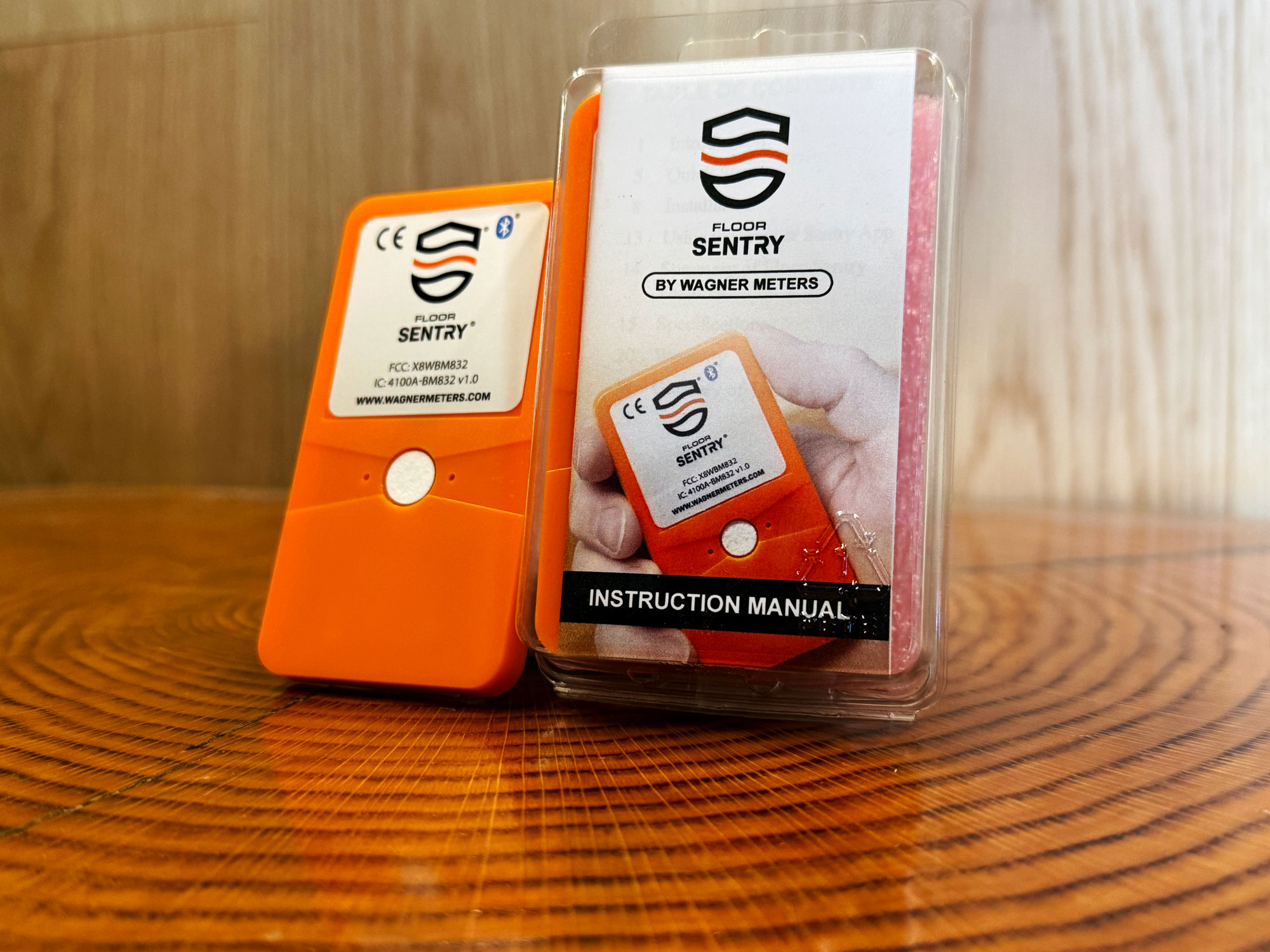
- We now carry the Wagner Floor Sentry Data Logger, which tracks conditions inside the floor itself.
Seasonal gaps, dry indoor air, and how to keep your floors stable through the heating season
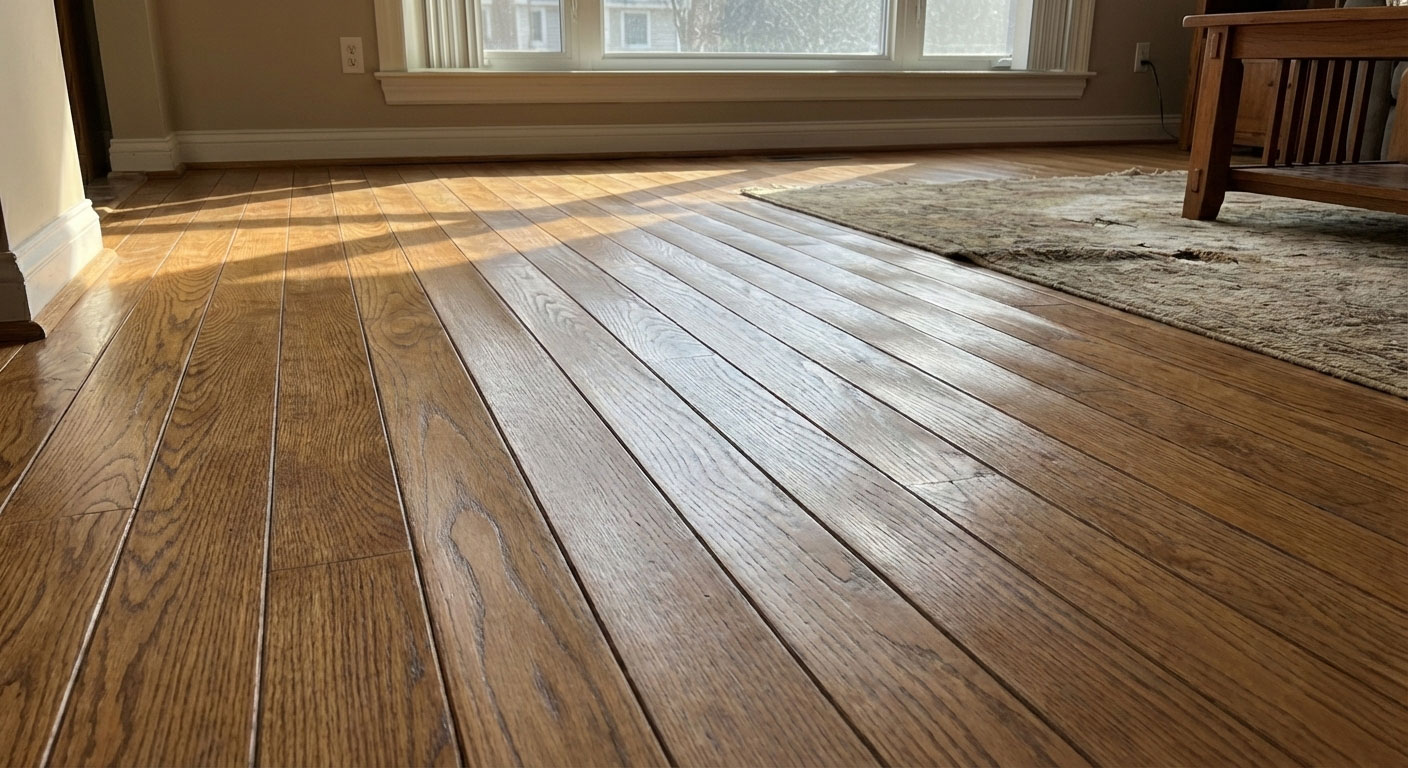
As the leaves fall and temperatures begin to drop across Maine, many homeowners start noticing subtle changes in their hardwood floors. Small gaps may appear between boards, floors may sound a little different underfoot, and some homeowners may even wonder if there's a problem developing.
The good news is that in most cases, what you're seeing is completely normal.
According to the National Wood Flooring Association (NWFA), wood is a hygroscopic material, meaning it naturally absorbs and releases moisture based on the environment around it. As humidity levels change, wood floors expand and contract.
Why Hardwood Floors Change During the Winter
When Maine transitions from the humid summer months into the dry heating season, the moisture content within your home changes dramatically.
During the summer:
- Higher humidity causes hardwood flooring to absorb moisture.
- Boards expand slightly.
- Seams between boards tighten.
During the winter:
- Furnaces, heat pumps, and wood stoves dry out the indoor air.
- Hardwood releases moisture.
- Boards contract.
- Small gaps between boards become visible.
This seasonal movement occurs in both solid and engineered hardwood flooring. The difference lies in the degree of movement, based on the species of hardwood and whether it is solid or engineered.
Solid Hardwood vs. Engineered Hardwood
Solid Hardwood Flooring
Solid hardwood is milled from a single piece of wood. Because it is 100% natural wood throughout its thickness, it experiences the greatest seasonal expansion and contraction.
Homeowners may notice:
- Seasonal gaps between boards
- Minor shrinkage during winter
- Expansion during humid summer months
- Greater movement in wider-width planks
Engineered Hardwood Flooring
Engineered hardwood consists of a real hardwood veneer bonded to multiple layers of plywood or slat core materials (spruce, pine, fir, oak, and others).
This layered construction helps reduce movement caused by humidity fluctuations.
Benefits include:
- Improved dimensional stability
- Reduced seasonal gapping
- Better performance over radiant heat
- Less expansion and contraction
However, engineered flooring is not immune to humidity changes. It still contains real wood and will respond to environmental conditions. It simply does so to a lesser degree than solid hardwood.
Understanding Maine's Unique Climate
Few states challenge hardwood flooring more than Maine.
Throughout the year, our climate experiences some of the widest moisture swings in the country.
Historical observations show:
- Relative humidity can frequently reach 100% during periods of dense fog, rainfall, and coastal moisture.
- During exceptionally dry weather events, relative humidity can drop under 20%.
- Winter air masses can produce very low dew points, with almost no moisture in the air at all.
For hardwood flooring, the challenge is not necessarily the outdoor humidity itself but how these conditions influence the indoor environment.
Once the heating system begins running continuously, indoor humidity often drops well below comfortable levels unless moisture is added back to the air.
What Is Considered Normal?
Many homeowners become concerned when they see narrow gaps appear between boards in December, January, or February.
The NWFA considers seasonal gapping a normal characteristic of wood flooring. In fact, gaps that appear during the heating season and close again during the more humid months are generally a sign that the floor is performing as expected.
Normal:
- Small seasonal gaps
- Slight shrinkage
- Floors becoming tighter during summer
Not normal:
- Large gaps that remain year-round
- Significant cupping or crowning
- Buckling
- Persistent movement accompanied by moisture issues
If you experience any of these conditions, it's worth consulting with a qualified flooring professional.
The Ideal Humidity Range for Hardwood Floors
The NWFA recommends maintaining indoor conditions between:
- 30% to 50% relative humidity
- 60°F to 80°F temperature range
These conditions help hardwood flooring reach and maintain a stable equilibrium moisture content (EMC), minimizing expansion and contraction.
For many Maine homes, maintaining this range during winter can be difficult without additional humidity control.
Tips to Reduce Seasonal Gapping and Keep Floors Flat
While you cannot completely eliminate wood movement, you can significantly reduce it.
1. Monitor Humidity Levels
Purchase an inexpensive hygrometer and place it in a central living area.
The goal: 30% to 50% indoor relative humidity year-round.
Many homeowners are surprised to learn their winter humidity levels fall into the teens or low twenties.
2. Consider a Whole-Home Humidifier
If your home consistently drops below 30% RH during winter, a whole-home humidification system connected to your HVAC system may help stabilize your environment. In older homes, you can purchase stand-alone humidifiers for rooms based on their size.
This is one of the most effective ways to reduce seasonal movement.
3. Avoid Extreme Temperature Swings
Rapid changes in temperature and humidity create unnecessary stress on wood flooring.
Try to maintain relatively consistent temperatures throughout the heating season.
4. Manage Wood Stove Heat
Wood stoves are common throughout Maine and create exceptionally dry indoor conditions.
If you heat primarily with wood:
- Monitor humidity closely.
- Consider supplemental humidification.
- Avoid allowing rooms near the stove to become excessively dry.
5. Maintain Your HVAC System
Properly functioning heating and cooling systems help maintain a more consistent indoor environment throughout the year.
6. Address Moisture Sources
Equally important is preventing excessive moisture.
Check for:
- Basement moisture issues
- Leaky crawl spaces
- Plumbing leaks
- Poor exterior drainage
Excess moisture can lead to swelling, cupping, and long-term flooring damage.
7. Consider a Wagner Floor Sentry® Data Logger
For homeowners who want a deeper understanding of how their home's environment is affecting their hardwood floors, the Wagner Floor Sentry® Data Logger can be an invaluable tool.
Unlike a traditional hygrometer that only measures the room's current conditions, the Floor Sentry is installed directly within the flooring system and continuously monitors:
- Temperature
- Relative humidity
- Moisture conditions within the floor assembly
The collected data can be viewed through a smartphone app, allowing homeowners and flooring professionals to track environmental changes over time and identify patterns that may contribute to seasonal gapping, excessive shrinkage, expansion, cupping, or other moisture-related concerns.
This can be especially beneficial in Maine, where homes experience dramatic seasonal humidity swings between humid summer conditions and the extremely dry air created during the heating season.
Rather than guessing why a floor may be moving, homeowners can rely on actual data to understand what conditions the flooring has been exposed to and take corrective action before minor seasonal movement turns into a larger issue.
At Independence Flooring & Supply, we now offer the Wagner Floor Sentry Data Logger and can help homeowners, builders, and flooring professionals determine whether it may be a good fit for their project.
A Final Thought
One of the characteristics that makes hardwood flooring beautiful is the fact that it's real wood. Like a snowflake, no two floors are ever the same. It's a living, breathing part of your home that has spent its entire life capturing carbon from our environment and protecting the air we breathe every day. Unlike synthetic flooring products, hardwood responds naturally to its environment and has a smaller carbon footprint than any other flooring category.[1]
As we move into another Maine winter, remember that a small amount of seasonal movement is not only expected, but also evidence that your floor is doing exactly what wood has always done.
While seasonal gapping is a normal characteristic of hardwood flooring, understanding the environmental conditions inside your home is one of the best ways to protect your investment. Tools such as hygrometers, whole-home humidification systems, and advanced monitoring devices like the Wagner Floor Sentry Data Logger can provide valuable insight into how temperature and humidity affect your floors throughout the year. Combined with proper installation and moisture management, they can help your hardwood floors remain beautiful, stable, and performing as intended for decades to come.
[1] Environmental Product Declarations: Wood Flooring Has the Lowest Carbon Footprint, Hardwood Floors Magazine (NWFA), 2023.