Dry Cupping in Engineered Wood Floors: Problems, Causes & Cures
Summary
Understanding and fixing dry cupping in engineered hardwood—especially with radiant floor heat
What Is "Dry Cupping"?
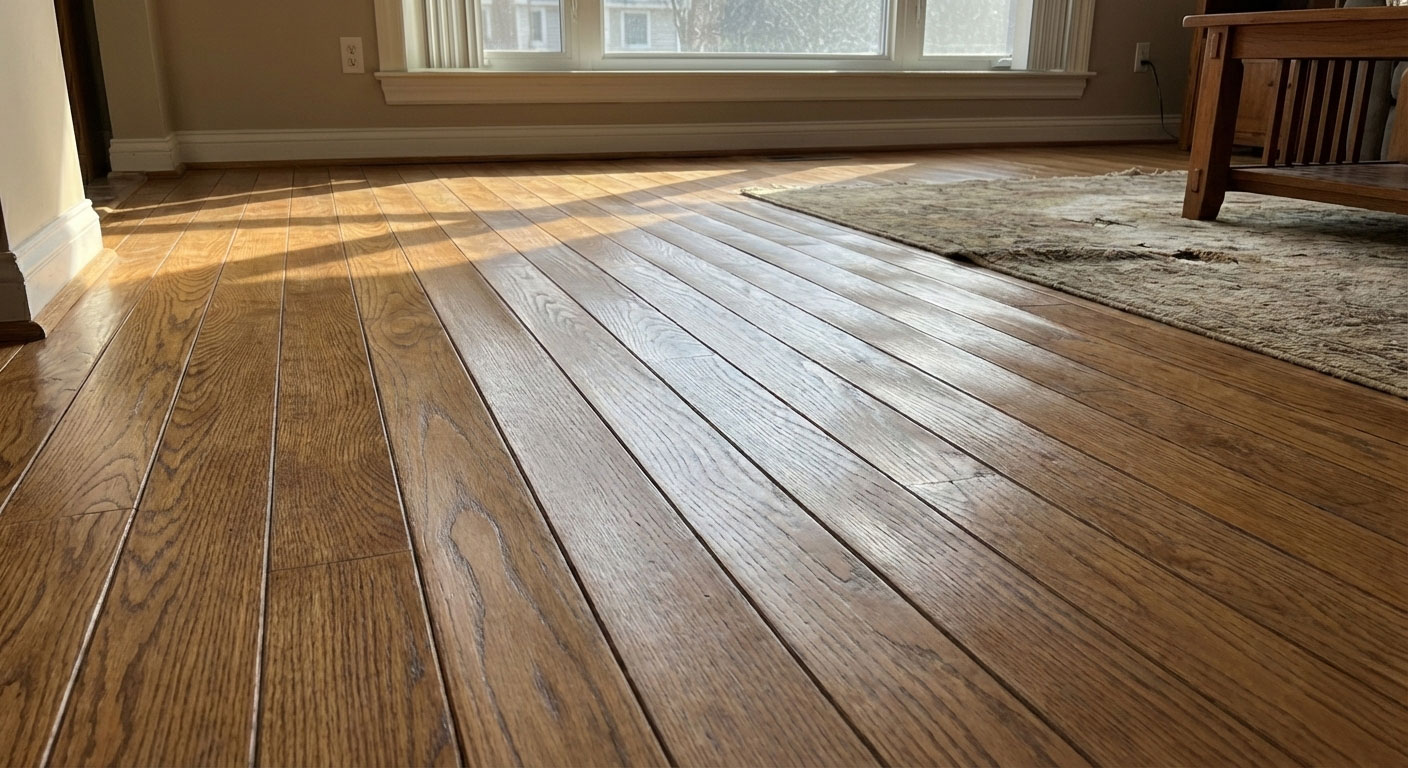
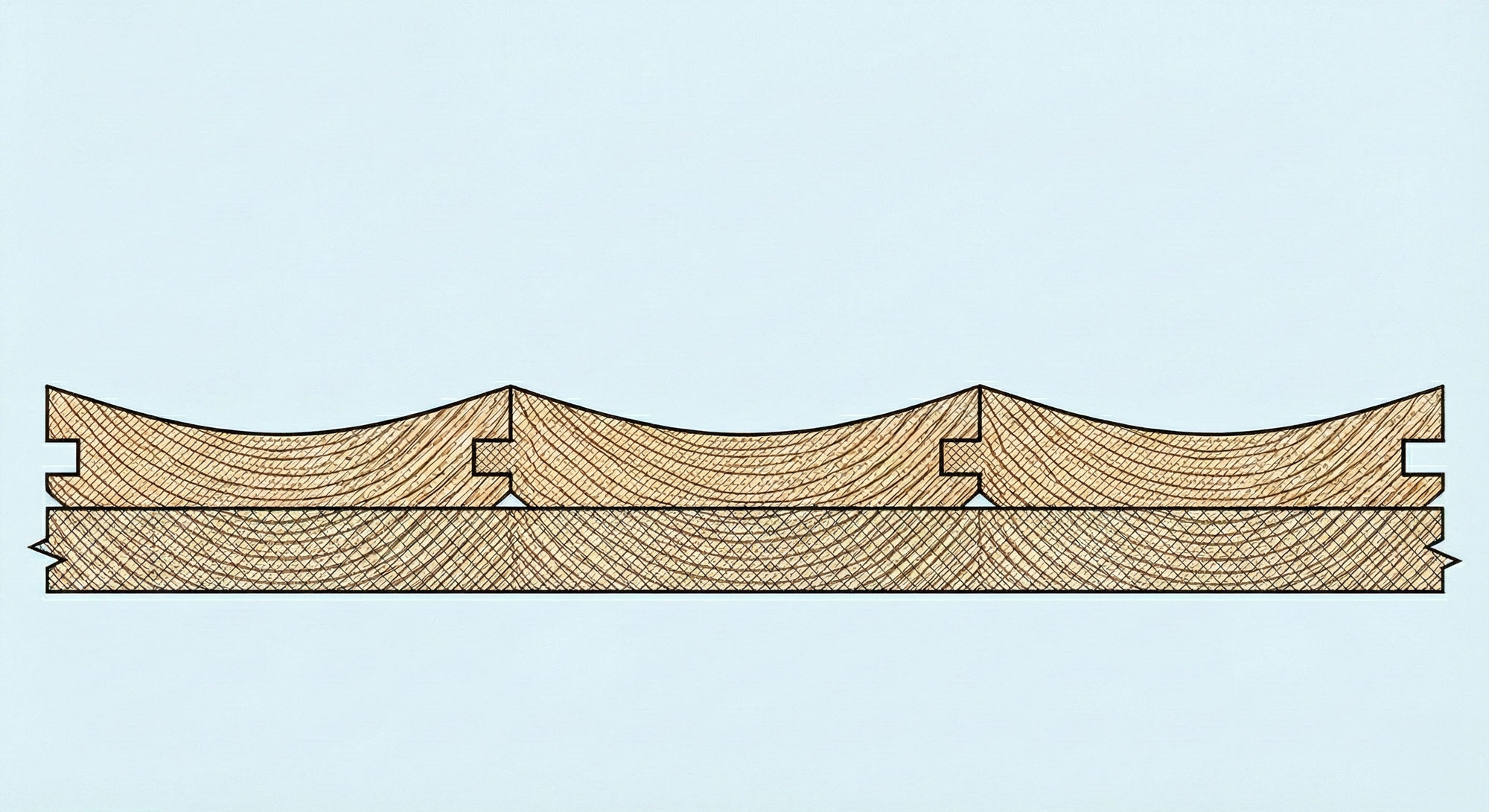
If your engineered wood planks look a little "dished" with edges higher than the center, you're likely seeing dry cupping. Unlike moisture (wet) cupping, which comes from too much water, dry cupping is caused by air that's too dry for too long—often made worse by radiant floor heat and winter conditions.
Why Does Dry Cupping Happen?
Engineered floors are built like a sandwich: a hardwood wear layer on top, bonded to core layers below. Wood constantly exchanges moisture with the air. When relative humidity (RH) drops below the flooring's recommended range, the wear layer loses moisture and shrinks across its face. That shrinkage can pull the plank's edges upward, creating the cupped look. Prolong the dryness, and the internal stress can even separate layers (ply separation).
Radiant heat's role:
Radiant systems deliver gentle, continuous heat from below. If the system runs dry and hot while the home's air is under‑humidified, it creates a moisture imbalance—the floor surface dries faster than the underside—amplifying edge lift. It's a classic winter scenario in New England homes: cold outside, heat on, RH dropping.
Common Triggers I See
- Low indoor RH for weeks/months (especially winter): wear layer dries and shrinks.
- Radiant heat or other heat sources from below increasing the top‑to‑bottom moisture imbalance.
- Aggressive drying (windows full sun + heat + no humidification) in already‑dry regions/seasons.
- Myth‑buster: Engineered floors are more stable than solids, but they're not immune to low humidity. Prolonged dryness can still make them cup—or, in severe cases, separate layers.
How to Tell It's Dry Cupping (Not "Wet" Cupping)
- Dry cupping shows during dry seasons or near heat sources; edges are up because the top dried and shrank.
- Wet cupping shows after moisture exposure (leaks, damp subfloors, high RH); the underside is wetter than the top.
- A professional can confirm with moisture readings top vs. bottom and by reviewing your home's temperature/RH history.
The Risks If You Ignore It
- Persistent distortion and noise/movement as stresses build.
- Ply separation in severe dryness: layers within the plank debond and won't self‑correct—board replacement required.
Cures (What Actually Works)
1) Restore the Indoor Climate
Bring RH back into range recommended by your floor manufacturer. If you don't have a number, NWFA's general guidance is 30–50% RH at 60–80°F. In many Maine winters, this means adding humidification. As you normalize conditions, mild dry cupping often relaxes on its own.
2) Manage the Radiant Heat
- Gradual setpoint changes (avoid rapid ramps).
- Keep surface temps within the flooring manufacturer's limits and pair radiant with whole‑home humidification to prevent moisture imbalance.
3) Inspect for Ply Separation
If you see open layers or lifted lamellae, the fix is board replacement—humidity alone won't "glue" layers back together.
4) Don't Sand a Moving Target
Do not sand to "flatten" a dry‑cupped engineered floor that hasn't stabilized. First restore RH; then reassess. With engineered flooring, sanding options are limited by wear‑layer thickness, and sanding doesn't solve ply separation.
Prevention: Set It Up for Success
Design for a stable environment year‑round:
- Install humidification sized for the home (and your radiant system).
- Use a hygrometer on each level; watch RH especially November–March.
- Program radiant heat for slow, steady operation; avoid big swings.
- Follow manufacturer limits on radiant surface temperature and flooring compatibility.
- During construction and first heating season, keep the home within living conditions, not "open‑air" or greenhouse‑like.
Quick Homeowner Checklist
- Is indoor RH 30–50% and temp 60–80°F? If not, adjust HVAC/humidification.
- Are radiant setpoints stable and within flooring limits?
- Any signs of layer separation? If yes, call for board replacement assessment.
- Plan seasonal RH management (humidify in winter, dehumidify in summer as needed).
When to Call a Pro
If the cupping doesn't ease after you restore RH, or if you spot ply separation, it's time for a professional evaluation. They should document RH/temperature trends, take moisture readings through the plank, and recommend the right fix—from climate correction to surgical board swaps.
Engineered Hardwood Floors: Separating Fact from Fiction